 Inggeris
 CN
CN 86-573-88890126
Search for etched vinyl and you quickly meet two different products that share one name. In the signage and film industry, etched vinyl is a matte, translucent self-adhesive film that reproduces the soft, diffused look of sandblasted glass at a fraction of the cost of treating the glass itself. In craft and glazing workshops, the same phrase describes adhesive vinyl sheets cut into stencils that mask the glass while it is physically etched. Both interpretations matter to buyers of flexible PVC materials, and confusing them leads directly to wrong specifications.
Both versions share one industrial backbone: calendered PVC film paired with a pressure-sensitive adhesive. Understanding that backbone makes every later decision on texture, adhesive weight, liner and thickness far easier to evaluate, whether you purchase one roll or a full container.
What Exactly Is Etched Vinyl? Two Products, One Name
The distinction matters commercially. One product is a finished decorative film installed for years; the other is a consumable that leaves the glass after a few hours. Pricing, quality checks and supplier expectations differ accordingly.
Etched glass vinyl film
Etched glass vinyl, often listed as frosted vinyl or sandblasted-effect film, is a thin calendered PVC film whose face is embossed with a micro-rough texture or treated to scatter incoming light. Applied to clear glazing, it converts transparent panels into the milky glass seen on office partitions, clinic doors, bank counters and fitting-room fronts. Light still passes through, commonly 50% to 75% for standard grades, but silhouettes and fine detail blur behind it. That combination of brightness without visibility is precisely the privacy effect architects specify, achieved for a modest cost per square meter instead of replacing or acid-treating the glass.
Vinyl stencils for true glass etching
The second meaning belongs to decorative glasswork. A plotter cuts a design into an adhesive vinyl sheet, the waste is weeded away, and the stencil is pressed onto the glass. Etching cream or an abrasive jet then removes a microns-thin layer from the exposed areas, and the stencil peels away to reveal a permanent frosted pattern. Here the vinyl never stays on the glass; it is a precision masking tool. The film must grip firmly through a wet or abrasive process, then release without residue, which places unusual demands on the adhesive.
A quick note on other uses of the phrase
Music collectors also use the term for records with engraved artwork pressed into one side. That usage belongs to the record industry and has nothing to do with sign-making media or architectural films. Buyers sourcing window film or plotter material can safely set it aside.
How Etched-Effect Vinyl Film Is Manufactured
The frosted appearance is not a printed ink layer; it is a physical surface structure created while the film is made. That is why two rolls that look identical in a catalog photo can behave very differently once light hits them on installed glass.
- Compounding. PVC resin, plasticizers, stabilizers and additives are blended into a homogeneous mix; the recipe sets flexibility, whiteness and translucency.
- Calendering. The blend is squeezed through heated rollers into a continuous sheet. Roller temperature and gap control determine thickness consistency from edge to edge.
- Matte embossing. An embossing roller imprints the micro-rough texture that scatters light. Finer textures look elegant but show fingerprints; coarser textures hide flaws but feel gritty.
- Adhesive coating. A pressure-sensitive adhesive is applied at controlled gauge; clear adhesives keep the frosted tone neutral, while tinted adhesives adjust the final shade.
- Liner lamination and slitting. A silicone-coated release liner protects the adhesive, and the finished log roll is slit to customer widths.
The frosted effect lives in the surface structure, which is why two visually identical rolls can still differ sharply once daylight strikes them on the glass.
Factories that run their own calendering and coating lines can adjust texture depth, shade and adhesive weight between batches; buyers relying on repackaged stock usually cannot.
Specifications That Separate Good Film from Troublesome Film
Etched films look alike in product photos, so procurement decisions should rest on measurable values. The ranges below reflect what the industry generally treats as standard for calendered frosted films.
Beyond those headline numbers, five details deserve written confirmation from any supplier:
| Specification | Typical range or option | Why it matters |
|---|---|---|
| Thickness | 100-140 micron | Thin films conform faster; thick films resist abrasion better |
| Adhesive | Clear or grey acrylic PSA | Grey adhesive deepens the frosted tone and hides bubbles |
| Release liner | One-side silicone paper or film | A weak liner causes adhesive flow and cut-width drift |
| Light transmission | 50%-75% | Determines how much privacy the installed panel delivers |
| Fire classification | B-s1,d0 or equivalent | Required for many commercial interiors in Europe and beyond |
Treat these values as a floor, not a ceiling. A supplier unwilling to state tolerances in writing is usually the one whose batches drift between orders.
Where Etched Vinyl Delivers the Most Value
Because the film combines diffusion with daylight, it earns its place wherever glass needs to separate without darkening:
- Office partitions and meeting rooms. Full coverage or banded patterns maintain openness while hiding screens and people.
- Full-height doors and sidelights. A frosted band doubles as a manifestation strip, which safety guidance increasingly expects on transparent glazing.
- Healthcare and clinic interiors. Diffusion protects patients in consultation rooms while natural light keeps working.
- Retail and hospitality. Frosted fields with cut-out logos turn ordinary glazing into brand space at low cost.
- Residential glass. Shower enclosures, cabinet inserts and balcony doors gain privacy without losing light.
When a frosted area also needs a logo, pattern or campaign graphic, print shops commonly output the artwork onto a matching self-adhesive film and layer the two on site.
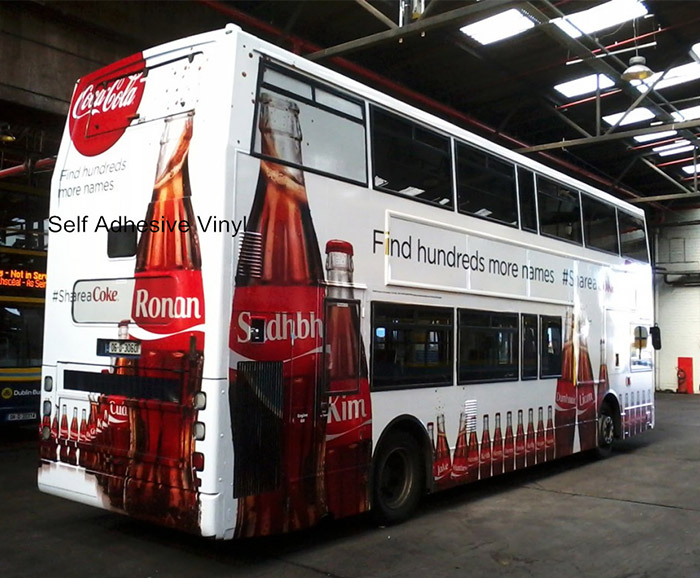 Printable Clear Adhesive Vinyl for Frosted Glass GraphicsA clear self-adhesive vinyl for digital printing, available in glossy and matte finishes with bubble-free removable adhesive and multiple roll widths. It suits the layered approach of printing logos or patterns onto matching film applied over frosted areas.View Product →
Etched Vinyl vs Other Glass-Applied Films
Etched film competes with several other self-adhesive options, and choosing the wrong one usually means paying twice. Thickness figures below are typical industry ranges rather than fixed standards, so compare data sheets under equal test conditions.
| Property | Etched glass vinyl | One-way vision vinyl | Clear printable vinyl |
|---|---|---|---|
| Surface | Matte, translucent | Perforated, printable | Gloss or matte, transparent |
| Daytime privacy | High | Moderate to high | Low |
| View from inside | Blurred silhouettes only | Clear one-way view in daylight | Fully clear |
| Graphics | Optional, subtle | Full-color storefront graphics | Full-color graphics |
| Typical thickness | 100-140 micron | About 120-160 micron | About 80-120 micron |
| Best fit | Permanent privacy zones | Advertising on shopfront glass | Window displays and decals |
For glass that must advertise outward while preserving a see-through view inward, perforated one-way vision film is the natural companion product, and many storefront projects use both side by side.
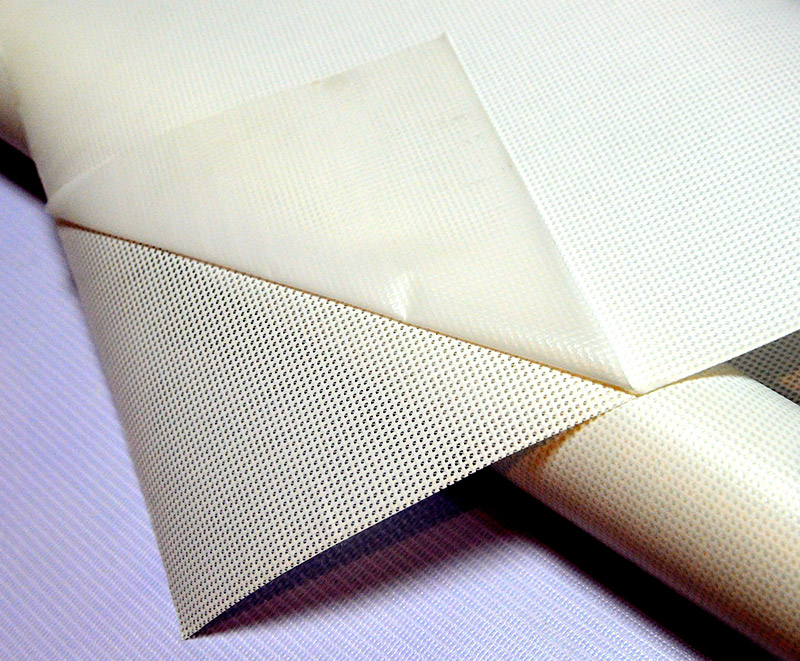
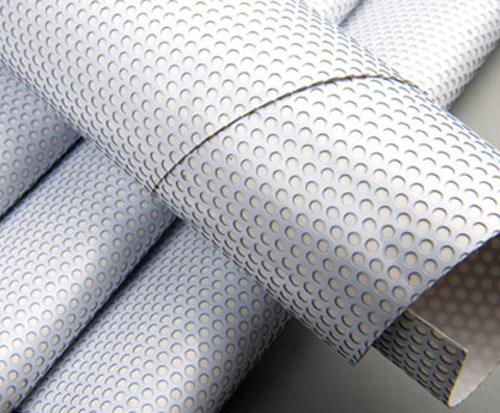 Perforated One Way Vision Window Film StickerA perforated adhesive film that shows graphics outward while preserving see-through view from inside, a common companion to frosted film in storefront projects. Many shops install both side by side to combine privacy, decoration and outward advertising.View Product →
Using Vinyl as a Stencil for Real Glass Etching
Where the project calls for permanently etched glass rather than a surface film, adhesive vinyl becomes the mask. The result is more durable than any applied film, but the process tolerates far fewer shortcuts. The workflow below reflects standard workshop practice:
- Select the stencil film. Permanent-adhesive vinyl resists longer abrasion and wet processes; removable grades suit short etching-cream sessions on delicate glass.
- Cut and weed the design. A fresh blade keeps edges crisp, and clean weeding prevents ragged lines after etching.
- Prepare the glass. Degrease with a suitable cleaner and dry with a lint-free cloth; most adhesion failures start here.
- Apply transfer tape and position. Registration matters, because etched lines cannot be repositioned afterward.
- Etch. Follow the dwell time specified for the cream or abrasive system, keeping the masked edges sealed against seepage.
- Remove and clean. Peel the stencil at a low angle, then wash away all residue before the glass dries.
Sign shops usually cut stencils from the same printable self-adhesive films they already stock for decals, because those adhesives are formulated to release cleanly from smooth, non-porous surfaces.
 Self-Adhesive Printable Vinyl for Decals and Stencil CuttingA printable self-adhesive vinyl in 80 or 100 μm thickness with clean-release adhesive, suitable for smooth non-porous surfaces like glass. Sign shops often cut stencils from this stock, and careful application technique matters more than material grade.View Product →
Installation and Maintenance Without Rework
Most complaints about frosted film trace back to application technique rather than material quality. Four habits prevent nearly all of them:
- Wet-apply large panels. A mild soap solution lets you slide the film into position before squeegeeing the liquid out.
- Squeegee from the center outward in overlapping strokes, working trapped moisture toward the nearest edge.
- Trim edges cleanly and never leave lifted corners; peeling almost always begins at a poorly finished edge.
- Clean gently. A soft cloth, mild detergent and no abrasive pads keep the matte surface uniform for years.
Storage matters as well: rolls should rest upright in their original packaging, away from direct sunlight, and panels should acclimatize to room temperature before application.
For a deeper walkthrough of surface preparation and squeegee technique, this step-by-step self-adhesive vinyl installation guide applies equally to frosted films on glass.
Frequently Asked Questions
Q1: Does etched vinyl film block light?
No. Standard frosted grades transmit roughly 50 to 75 percent of incoming light. The film diffuses direct sightlines, not daylight, which is why it is preferred over curtains or dark tinted glass in offices and clinics.
Q2: Can etched glass vinyl be removed later?
Yes. Removable and repositionable grades peel away with gentle heat from a heat gun or hair dryer. The adhesive itself is single-use, so a removed panel cannot be reliably stuck back onto the glass.
Q3: Will the film work on acrylic or polycarbonate glazing?
Usually yes, but test first. Some adhesives interact with plastic sheet and cause crazing over time, so request a compatibility statement or a sample panel before committing to a full installation.
Q4: How long does etched vinyl last outdoors?
Premium calendered films are formulated for three to five years of exterior exposure. Interior installations often remain serviceable for seven to ten years because ultraviolet load is far lower behind glazing.
Q5: Can graphics be printed directly onto frosted film?
Many frosted films accept solvent, eco-solvent, UV and latex inks, but surface treatment varies between manufacturers. Confirm the coating with your supplier, or print onto a clear film and layer it over the frosted base.